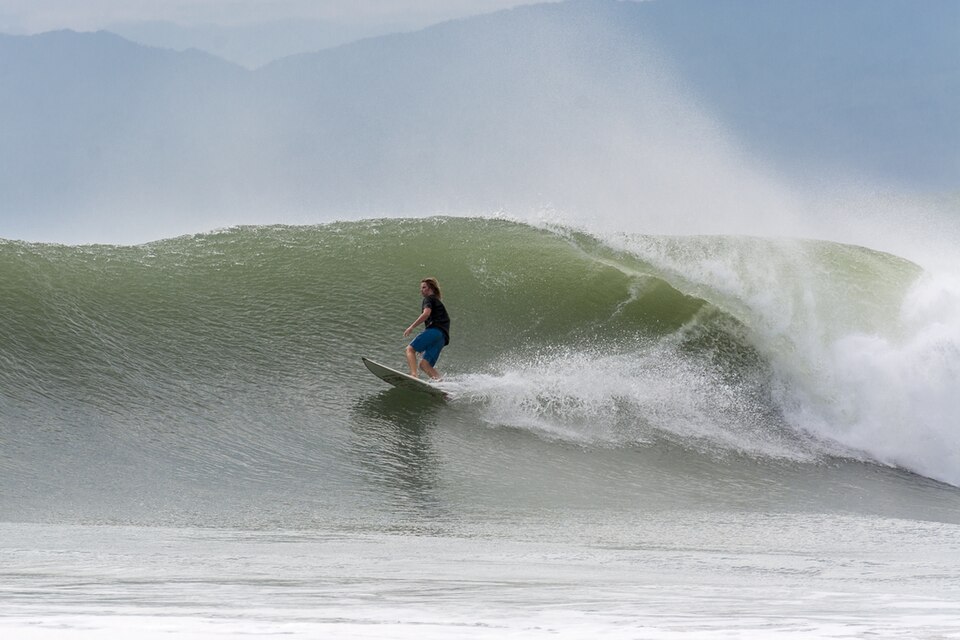
Californian surfers first found the waves at Zicatela in the 1960s, when the coast highway reached the bay. Before the 1930s there was no town here at all, just a cove used to ship coffee.
The Mexican Pipeline (Did you know?): Zicatela means "place of large thorns" in Nahuatl. Surfers call its wave the Mexican Pipeline, and the Encyclopedia of Surfing calls it "the world's gnarliest sand-bottom wave".
Why it's the Hidden Port (Did you know?): Puerto Escondido means Hidden Port. Legend says a Mixtec woman escaped from a pirate ship in the bay and hid in the jungle. The pirates called her La Escondida, the hidden one, and the name stuck.
A World Surfing Reserve (Surf history · 2026): On 21 March 2026 Puerto Escondido was dedicated as the 14th World Surfing Reserve. It covers 10 kilometres of coast, including Zicatela, Playa Marinero, Playa Carrizalillo and Punta Colorada.
Playa Carrizalillo (Worth a stop: Playa Carrizalillo): Playa Carrizalillo is a small cove with no road down to it: you reach the sand by a long stone stairway. The water is usually gentle, with waves to surf where the bay opens to the ocean.
A perfect 10 at Puerto Escondido (Surf history · 2016): In June 2016 the World Surf League opened its Big Wave Tour season at Puerto Escondido. South African Grant Baker won, scoring a perfect 10 in the final for a ride through the hollow of a wave.
El Adoquín (Worth a stop: El Adoquín): El Adoquín, "the paving stone street", is the old main street of Puerto Escondido: Avenida Pérez Gasga, running beside the town beach and lined with cafés, bars and craft shops.