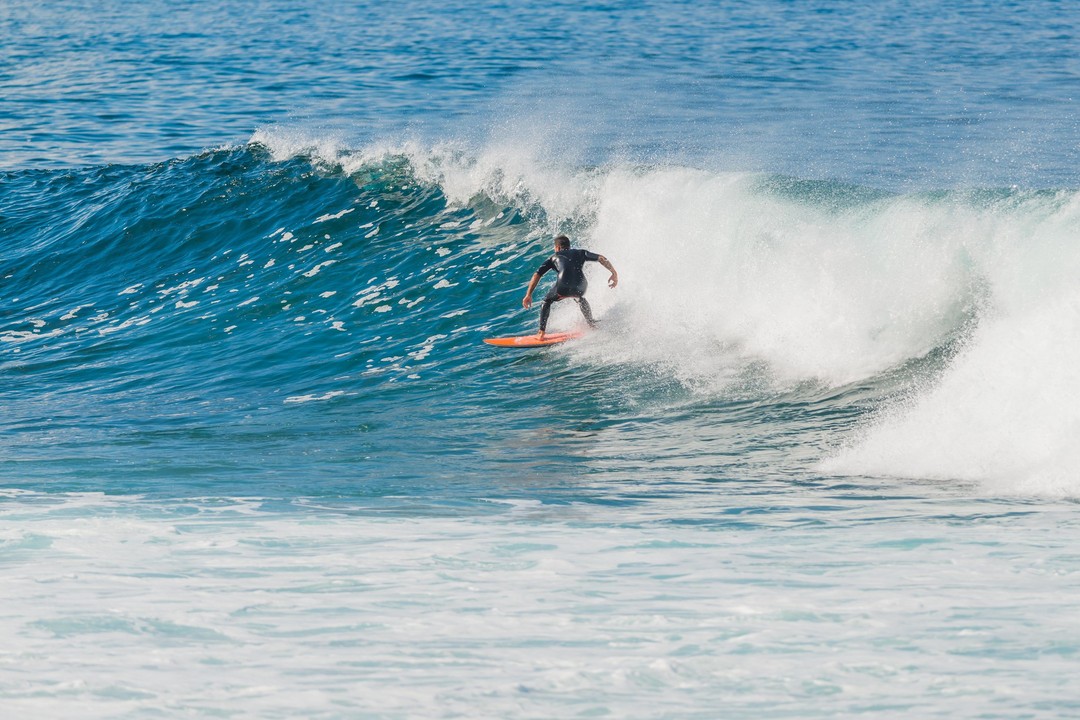
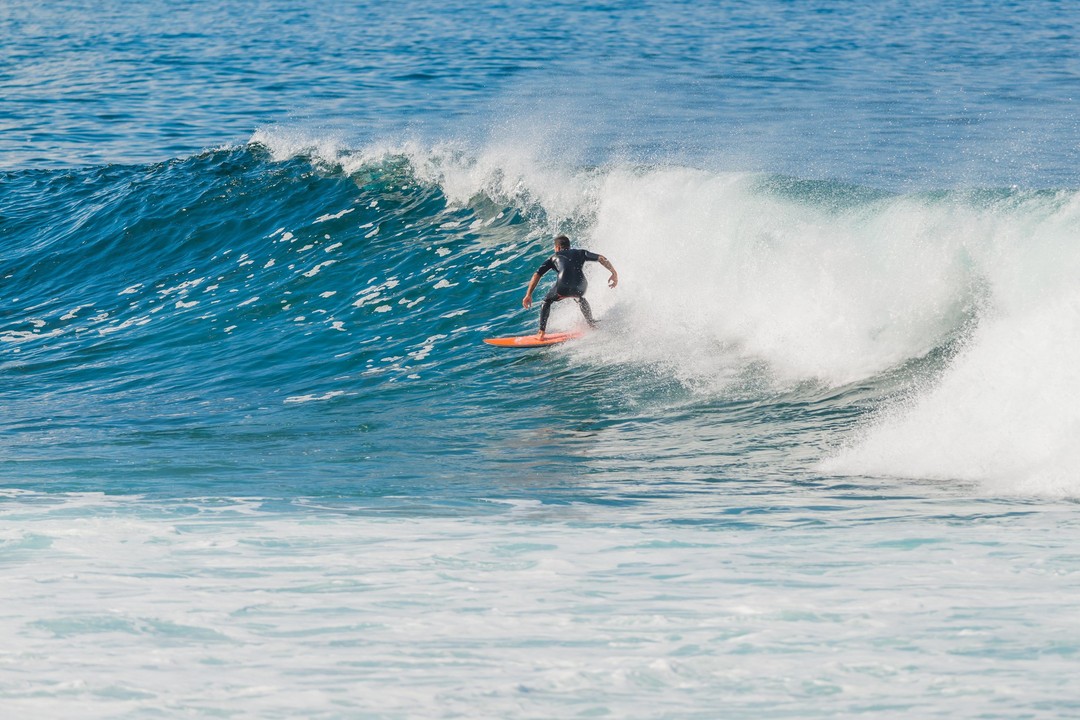
The Famara cliffs belong to the Chinijo Archipelago Natural Park, a protected area since 1986. Chinijo means small in the speech of Lanzarote, where it is mostly a fond word for children.
The rim of an old volcano (Did you know?): The cliffs above Famara are the remains of a volcanic caldera about ten kilometres across. They peak at 671 m at the Peñas del Chache.
Where Manrique was a boy (Did you know?): The artist César Manrique, born in Arrecife in 1919, spent his childhood between El Charco de San Ginés and La Caleta de Famara, where his father built the family house. The place inspired his later defence of the island's nature.
A village with no one in it (Did you know?): La Caleta was born as a fishing place at the end of the 18th century. In 1850 it was still recorded as having no inhabitants. By 1909 it had three buildings, twenty-four storehouses and twenty-five people.
A lookout hidden in the cliff (Worth a stop: Mirador del Río): At the top of the Famara cliffs, in Haría, César Manrique's Mirador del Río is dug into the ground and covered with volcanic stone, so it barely shows from outside. Opened in 1973, its two arched windows look out to La Graciosa.
Corals in the rock at La Santa (Did you know?): On the islet of La Santa, a fishing village on Lanzarote's north-west coast, bits of a shoreline formed 135,000 years ago hold fossil corals that reached their highest latitude here. Legend has the village named after a healer by the sea.